
Building A Legacy
Hannah Foy
Founder & Owner, Lau Lau
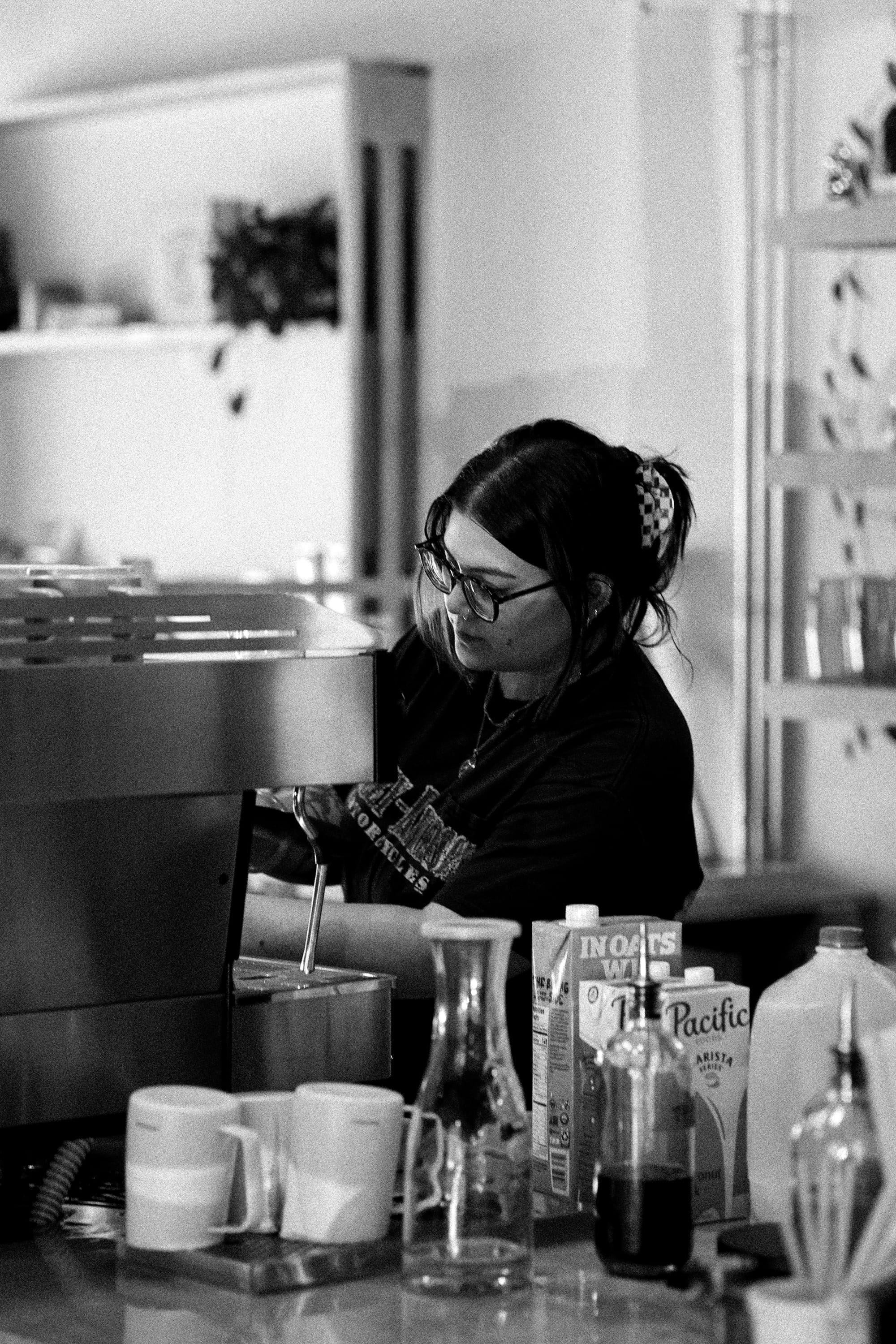
It was 2020. Minneapolis. The pandemic had already taken her job and her husband's. Then George Floyd was killed. The streets filled. And Hannah — already experiencing the actions of racism — felt the weight of two things happening at once: grief and clarity.
The grief was obvious. The clarity was this — stop waiting for the right time. The right time was now.
Enter: Lau Lau.
...
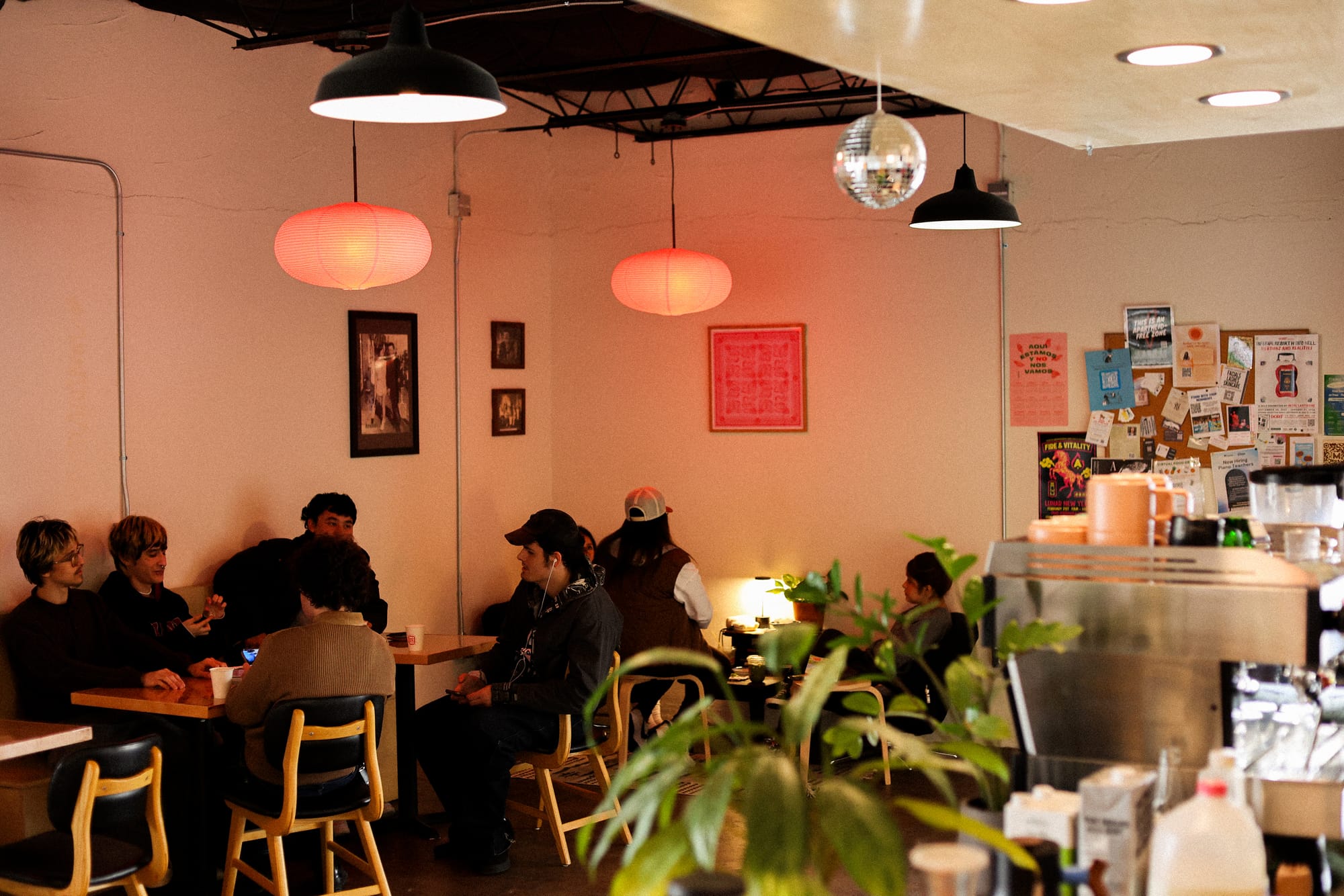
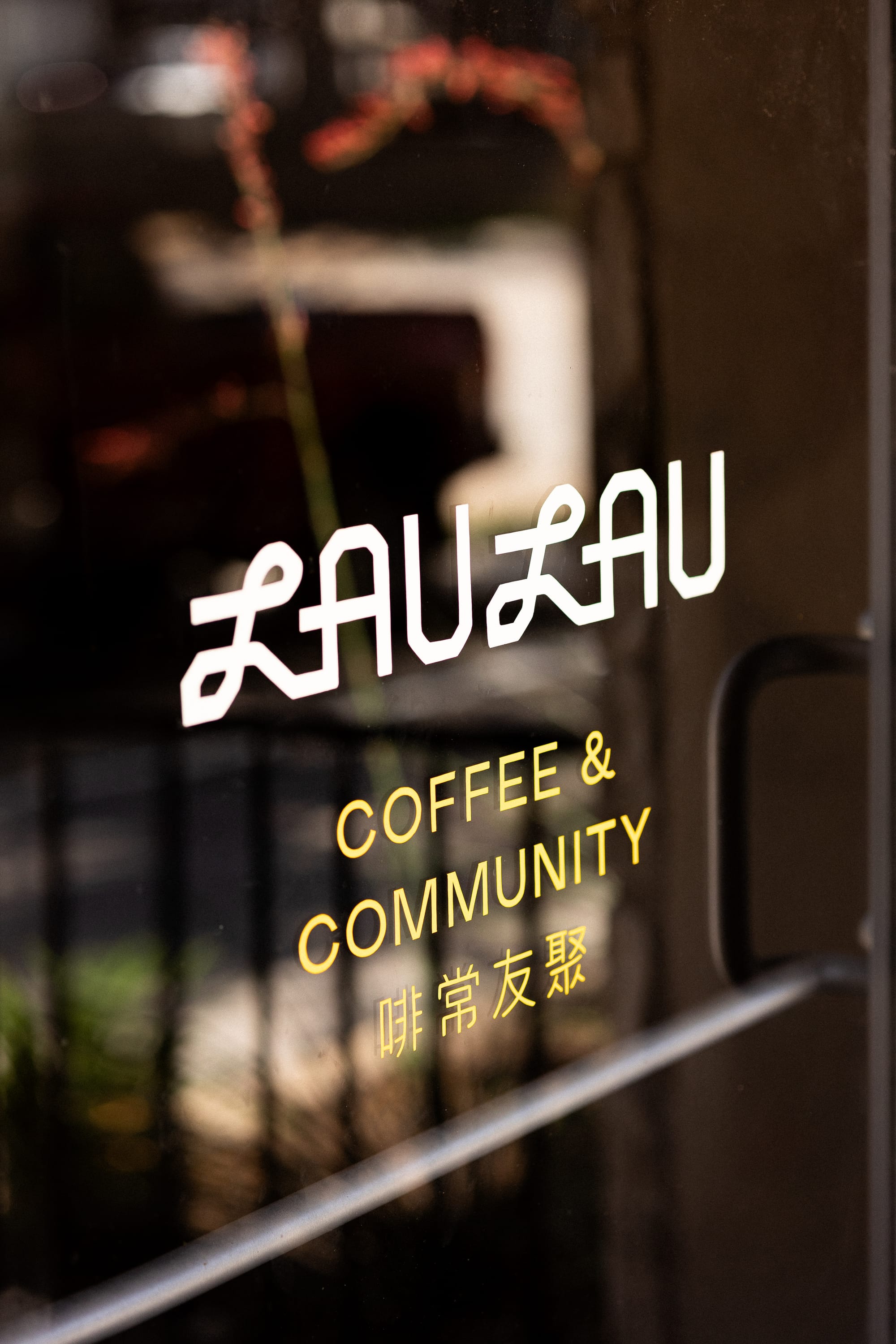
Lau Lau is not a coffee shop that happens to care about community.
Hannah is deliberate about this. Community is the focus. Coffee is the vessel. And for what it's worth — the drinks are amazingly good.
She calls this focus radical care. And she means it literally — holding space for the people who want to speak up but can't. The ones who resonate and agree with what she's saying, who feel and experience it, who would say it themselves if the systems were different. She has citizenship. She has safeguards. Not everyone has that.
So she speaks. Not for herself, but for the person who can't.
That means being vocal about racism. About the current administration. About anti-immigration policies that are tearing communities apart. She knows what that visibility costs. When people say to her, "It's so great that you're not scared to do that" — she internalizes that. Because being that public means the walls come down. It opens the door to retaliation, to criticism. To backlash she can't always anticipate.
She carries her staff in that calculation. She carries the people who depend on Lau Lau staying open. She carries the weight of wanting to protect them while still putting herself out there.
She said it plainly: she's terrified.
But she keeps going. Because she reminds herself of who she's doing it for.
...
Lau Lau is a physical expression of all of Hannah. Not one culture highlighted at the expense of another. She is proud of what manifested, in her mother's namesake. As she speaks about all the little details, you can see her eyes light up.
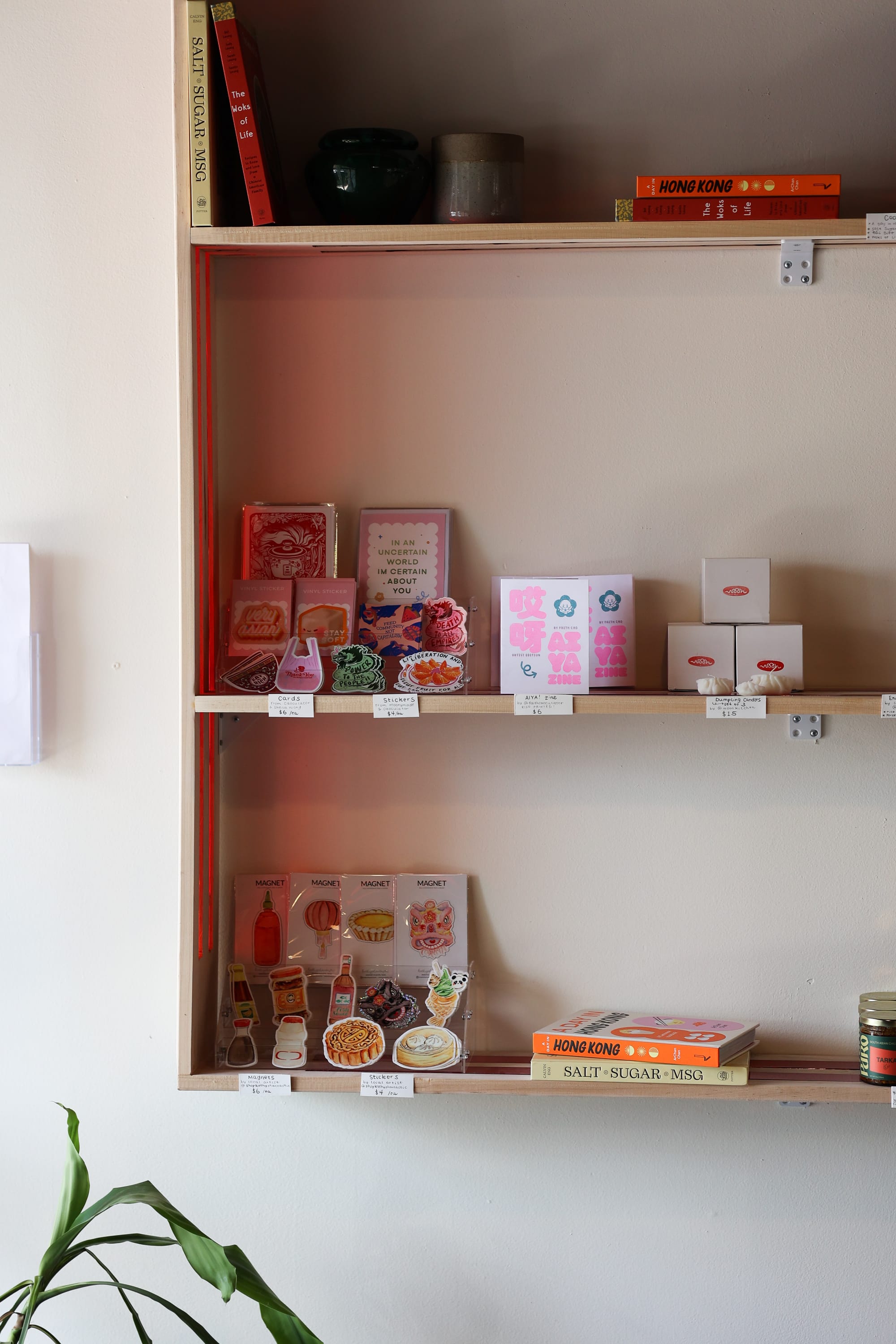
BIPOC artists on the walls. Filipino staff celebrated. Drinks tied to specific cultures across the diaspora. Vendors and makers on the retail shelf from across the Asian American community — including a childhood neighbor from Wisconsin, Kyle Smith from Superthing Coffee.
Hannah is half-Chinese, half-white, and she's spent a long time living between those two worlds. The white side that says it's okay to make mistakes. The Asian side that holds a higher and harder standard. She lives in the tension between them, and Lau Lau was built from that same space.
The message she wants people to walk away with is simple: This is all of me. Whatever you are, you can be all of you here too.
Not just a Chinese-American café. A home for the ones who have always existed between worlds — and for anyone who has ever had to decide which parts of themselves were safe to show.
...
Before Lau Lau, Hannah wore a lot of hats.
Teacher. Barista. Bartender. Corporate employee. English language instructor in Spain. Events manager. Hostel worker.
She doesn't see any of these experiences as wasted. She sees it as a collection. Skills don't belong to one context. You carry them. Managing rowdy seven-year-olds and managing drunk adults at a closing bar are not as different as people assume — both require reading the room, redirecting, knowing what someone actually needs.
She's skeptical of what she calls the traditional path. The one pushed from White America early on: school, graduate, climb the corporate ladder, get the dog, get married, have kids. She asked out loud: who is this actually benefiting?
For children of immigrant and refugee families especially, that pressure is real. Doctor, lawyer, engineer. This is how our parents thought we would fit in to that American Dream. The comparison. The shame if you don't meet it. Her message is simpler than it sounds: ask yourself what you actually want.
Because not liking something, ending up somewhere unexpected, moving back to your parents' house after being abroad when the money runs out — that's not backsliding. It's just the path you're on.
She said directly: she was lucky to have that safety net. Not everyone does.
A little bit of delusion goes a long way. I can do this. All the non-linear experiences, all the hats — they're exactly what made her someone who could build Lau Lau the way it is today.
...
Every choice in the physical space was intentional. It feels like a home, and Hannah said it looks not too different than her own. (I promptly invited myself over to her house).
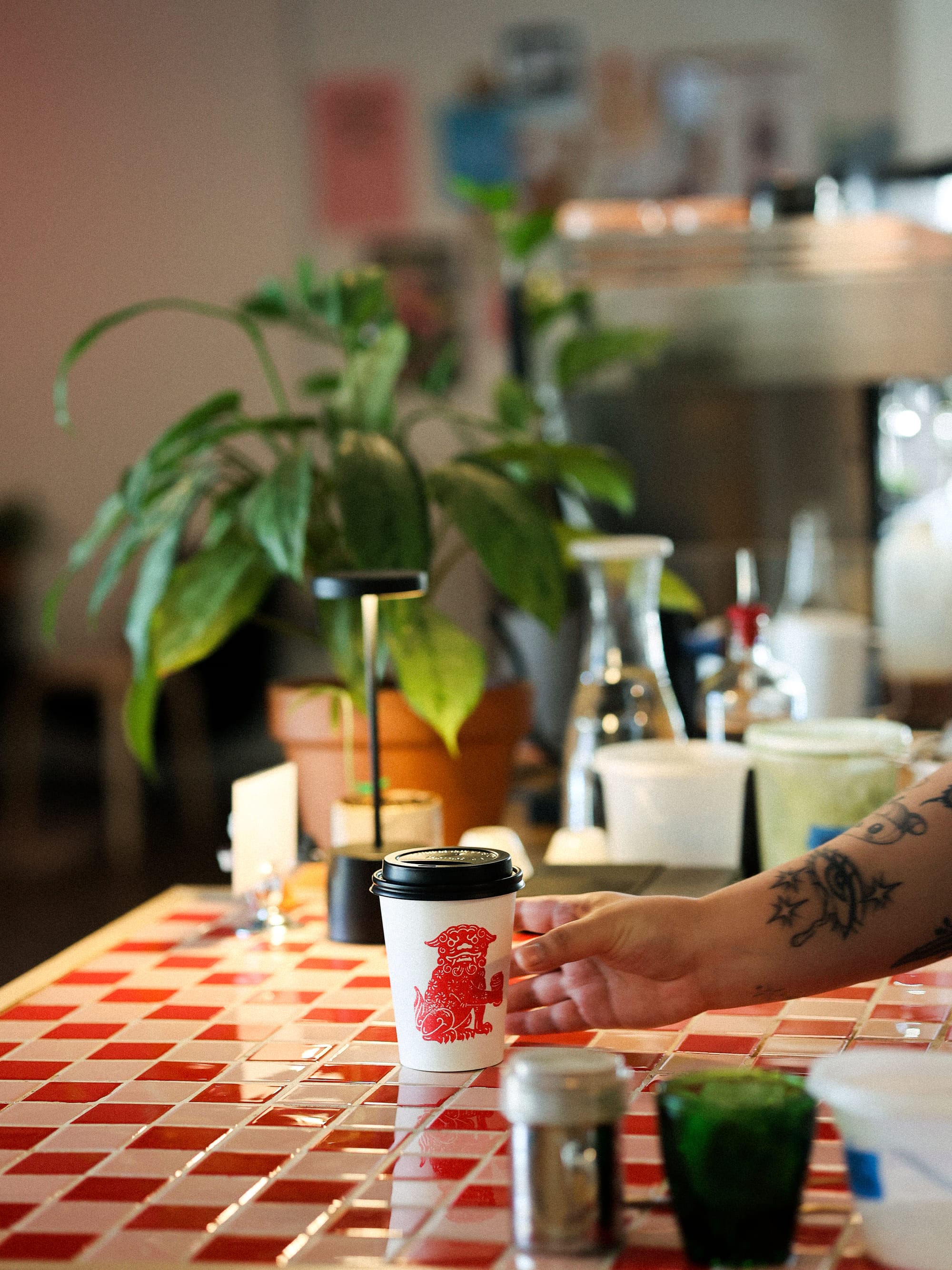
Her brother-in-law's design firm, Trackmeet, helped put her vision into something cohesive. Her husband, Chris Praetzel, shot the photography that set the general vibe. Natalia Lee at Shine City Makers handcrafted the mahjong table, the window bar, the coffee bar, the overhangs, the retail shelves. The sign was painted by Katherine Talley of &Daughters.
Hannah prioritizes women-owned businesses, Asian vendors, people she knows, trusts, or have the same mission and value alignment. Every vendor on the retail shelf is someone she believes in. The shelf itself is a big part of Lau Lau — a way to share and credit the makers she wants people to know about.
She put it clearly, there's a team behind the madness. Lau Lau didn't appear out of nowhere. It was built by a community of people who showed up.
The Lucky Market Festival, Mahjong Mafia, and Gia Đình Goods were early supporters, bringing their own community through the door. Austin Studio Tours opened the door to markets and collaborations that gave Lau Lau its early footing. Credit, always, goes to the people who were ready to lend a hand.
...
Hannah names a tension a lot of mission-driven small business owners carry.
Can you be an anti-capitalist small business?
Her answer isn't a manifesto. It's a series of everyday decisions. Pricing that reflects what it actually costs to pay staff well. Small-batch sourcing. No upcharge on alternative milks — because what you want to drink shouldn't cost more based on what your body can handle. As a parent of a daughter with a dairy allergy, that choice lands differently for me. It's a small thing that tells you a lot about how a place thinks about who walks through its door. Drink specials that send a dollar to a partner organization. Not as a marketing move. Because the intentionality behind it matters.
The question she keeps coming back to: Where are your dollars going?
Capitalism is the system we all must participate in. She can't opt out of rent, labor costs, margins. She knows that. But she can decide how she moves within it. Who she pays. Who she sources from. Who benefits when someone buys a drink at Lau Lau.
She doesn't want it to be a flash in the pan. She doesn't want it to be run by corporate investors. She wants it grounded in the people who actually come — who believe in the same things.
A real hub. Not a brand.
...
When Hannah talks about the Austin food scene and the people she deeply admires — Comadre, Paprika — she's not doing it to name-drop. She's describing a philosophy.
Mission first. Product second. Who they are is more important than what they sell. And to be clear — their food is also amazing.
And none of them are competing to be number one. They're building something together. Independent operators, same city, sometimes the same cuisine.
...
Hannah ended the conversation with urgency.
Attacks on immigration rights. Workers' rights. Women's rights. The current political moment is not abstract for her. It's personal. It's present.
She doesn't go to every protest. Crowds bring on anxiety. She's made peace with that. Because activism isn't one shape. Her role is to hold space. To nurture. To give people an entry point — a place to find their footing, to feel seen, to gather before they're ready to do anything else.
She said it directly:
We are who are going to save each other.
Wherever you're at. Whenever you're ready. Start somewhere.
Lau Lau is somewhere.
If this story felt familiar, that's because it probably is.
Silk Network exists to document and amplify the builders among us — the entrepreneurs, organizers, artists, and community-holders carrying our communities forward.
- Follow Silk Network for more community stories
- Subscribe to the newsletter for insider features